STUDENT-FOUNDED. STUDENT-LED.FREEDOM HIGH SCHOOL · VIRGINIA
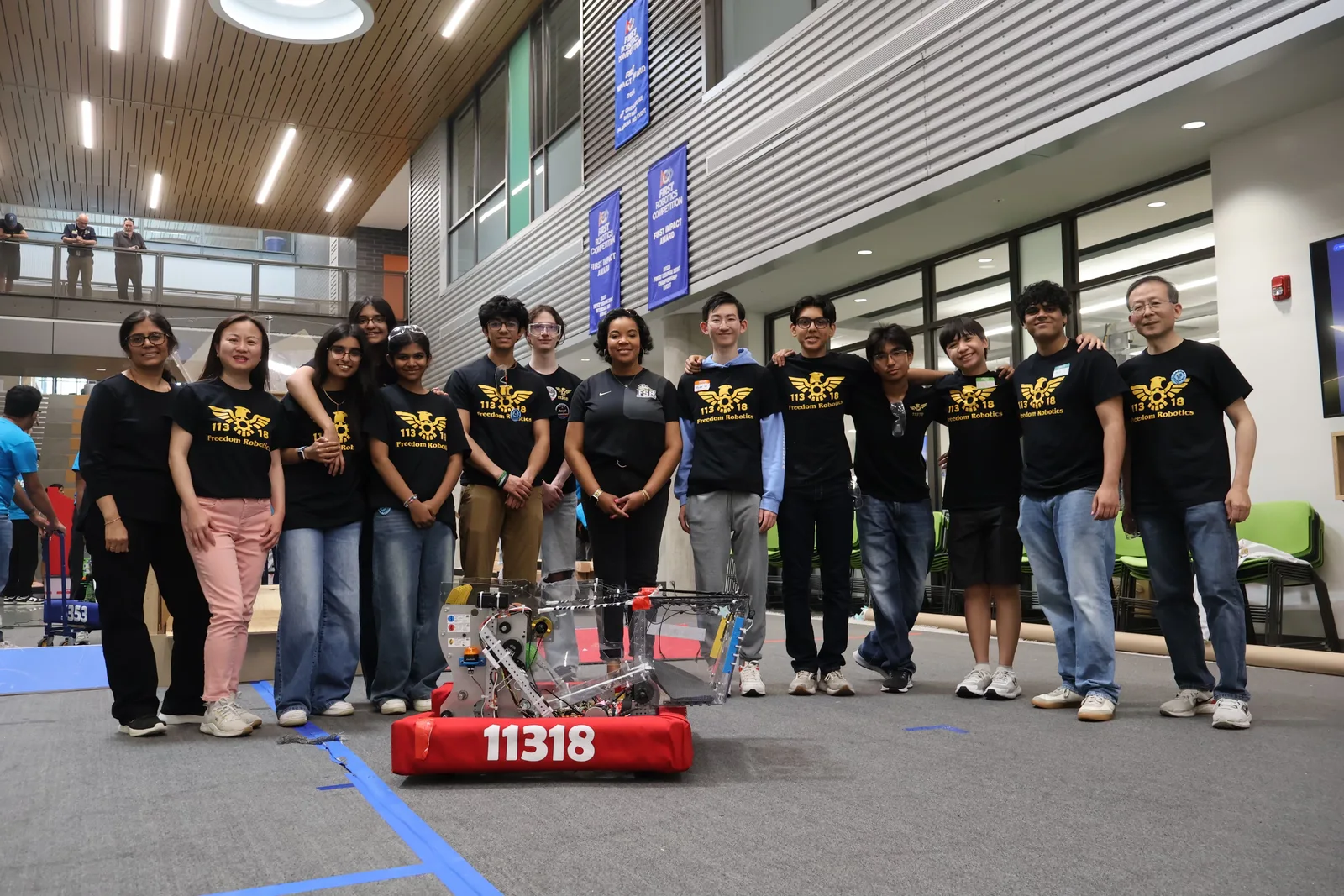
Freedom Robotics members standing with their robot at school

ONE TEAM. MANY WAYS TO CONTRIBUTE.

Find your place.
Make your mark.

Our members develop skills in engineering, programming, teamwork, leadership, fundraising, and community outreach. Every discipline contributes to the robot—and to the team around it.

We compete in the Chesapeake District. In our rookie season, we advanced to the FIRST World Championship and earned the Curie Division Rookie All-Star award.

HOW WE WORK

Four areas.
One shared goal.

Our rookie season brought together mechanical, software, electrical, and business members. We design, build, test, and improve together.

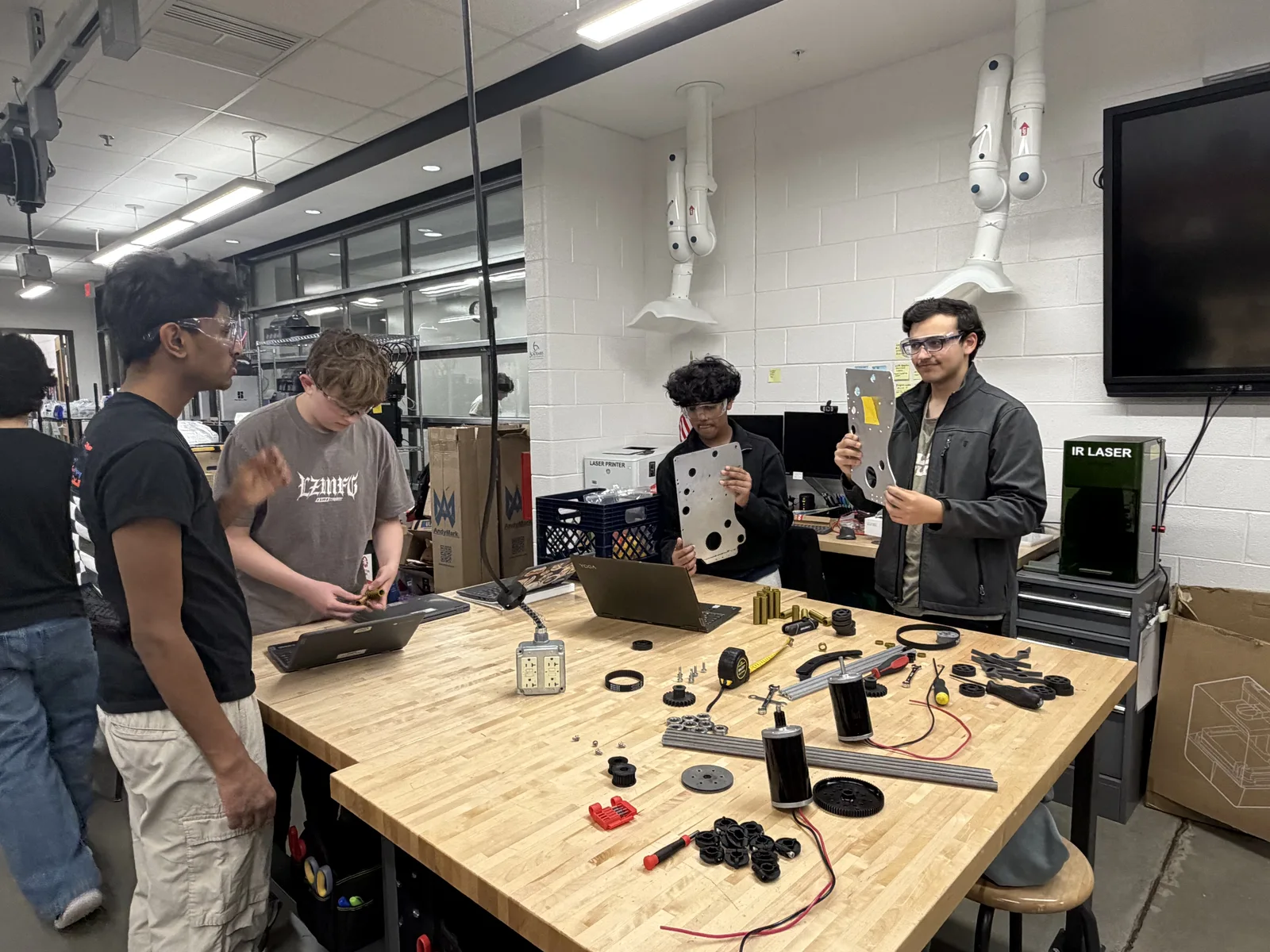
Students working on robot assemblies in the workshop

01 / MECHANICAL

Turning ideas into mechanisms.

We design, construct, and maintain the robot—from its drivetrain and bumpers to its intake, shooter, and game-specific mechanisms.

Explore the work
  • Design mechanisms, custom components, and assemblies in Onshape CAD.
  • Prototype, test, and refine functional, efficient, and reliable systems using engineering principles.
  • Build field elements for robot testing and driver practice.
  • Repair the robot and adjust mechanisms during competitions.
  • Work with electrical and software members to integrate every system.
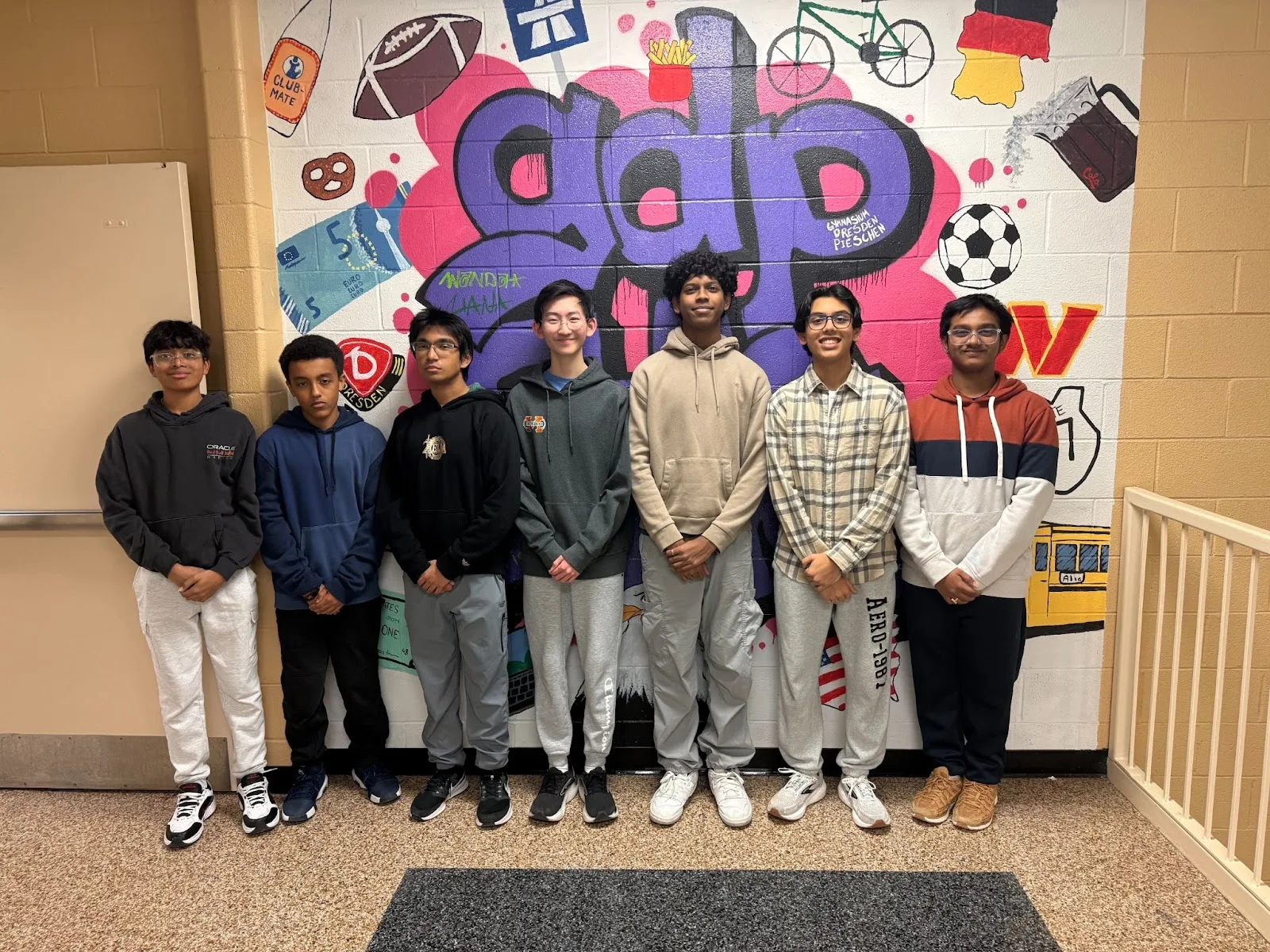
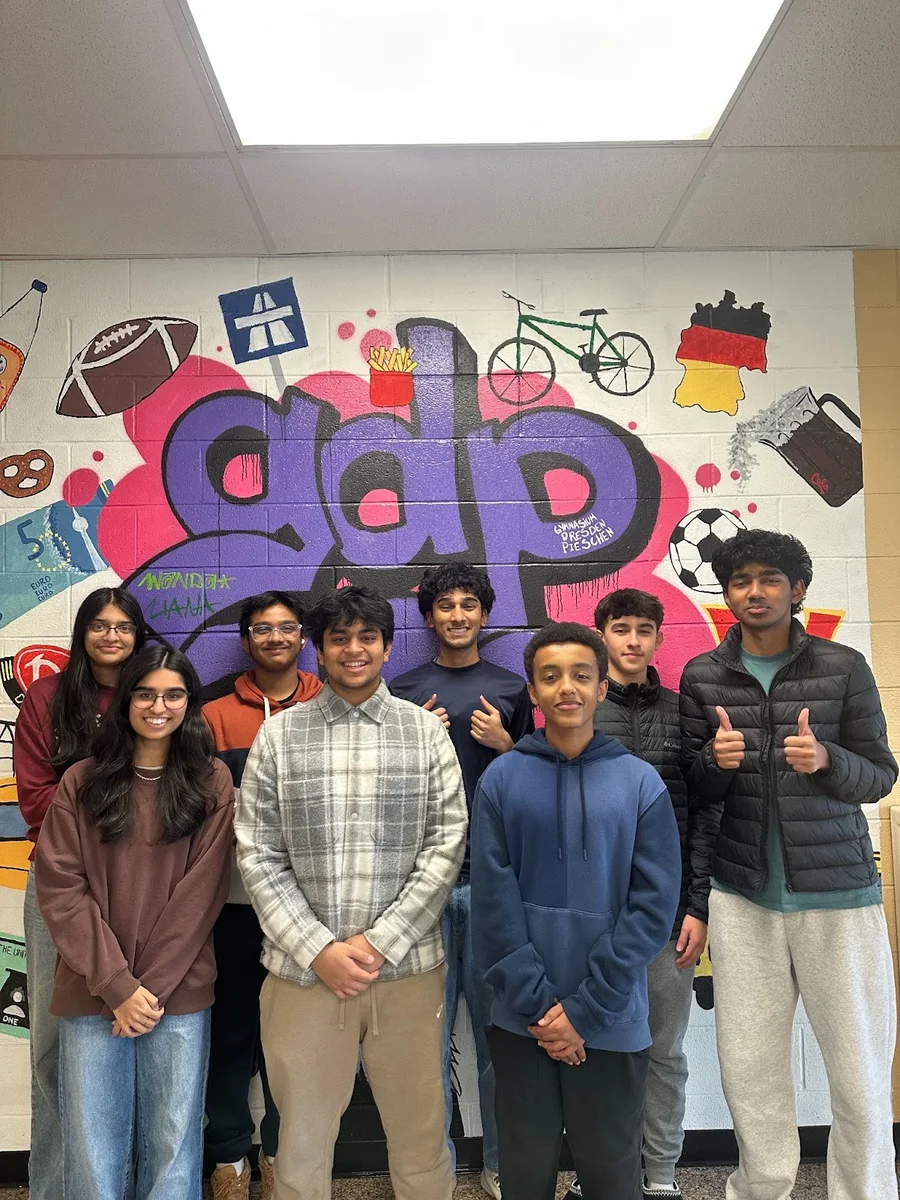
Freedom Robotics software subteam members

02 / SOFTWARE

The code behind every move.

We program the mechanisms, drivetrain, vision systems, and autonomous capabilities that turn the robot into a coordinated machine.

Explore the work
  • Program the robot in Java using WPILib, including individual mechanisms and a tuned swerve drivetrain.
  • Build autonomous routines with PathPlanner.
  • Use PhotonVision for computer vision and robot localization.
  • Develop automated systems, including vision-assisted shooting.
  • Test, debug, and improve robot performance with mechanical and electrical teammates.
  • Maintain GitHub repositories and organize development through issues, branches, and discussions.
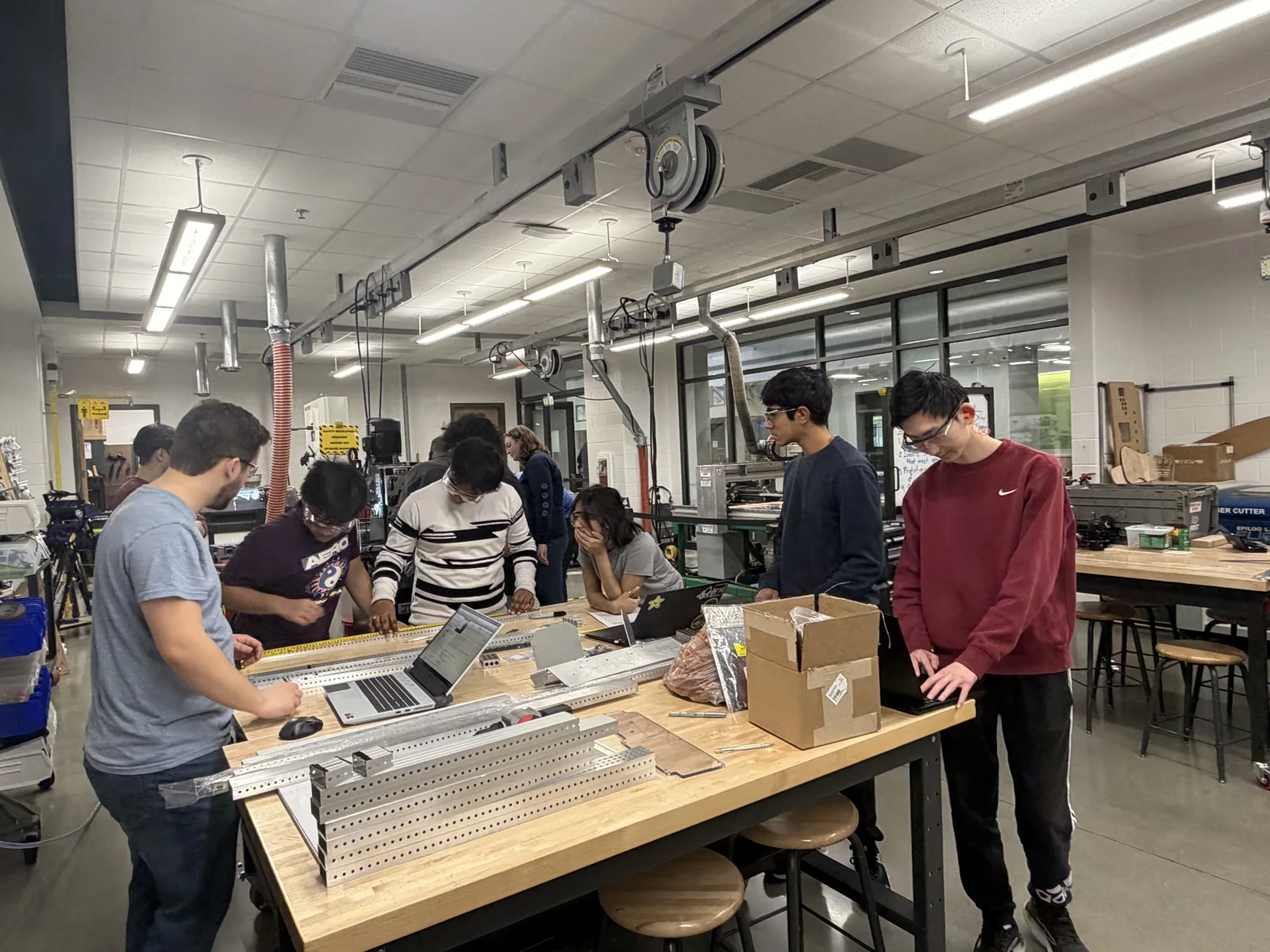
Team members integrating components at a workbench

03 / ELECTRICAL

Connecting the whole system.

We plan the robot’s electrical architecture, wiring, and power distribution to keep every component connected and reliable.

Explore the work
  • Plan component layouts using Onshape, MKCad, and 0xWire.
  • Install and connect motors, motor controllers, sensors, and other electrical components.
  • Configure the CAN communication network and manage power distribution.
  • Organize wiring for reliability, accessibility, and safety.
  • Diagnose and repair electrical problems during testing and competitions.
  • Collaborate with mechanical and software members to integrate hardware and software.
Freedom Robotics business subteam members

04 / BUSINESS

Making the team sustainable.

We lead fundraising, sponsorships, outreach, and public engagement so the team can keep building and sharing what it learns.

Explore the work
  • Plan community outreach and coordinate weekly library STEM workshops.
  • Develop robotics, programming, and engineering activities for younger students.
  • Organize demonstrations at schools, festivals, FIRST events, and STEM programs.
  • Connect with sponsors, apply for grants, and identify funding opportunities.
  • Organize fundraising and help manage the team’s financial resources.
  • Support community partnerships, team mentorship, and STEM accessibility.

WHAT WE CARRY WITH US

01

Learn by doing.

Make a prototype. Write the code. Test an idea. Every iteration is an opportunity to learn.

02

Build as a team.

Our strongest work happens when different skills come together and students take the lead.

03

Share the opportunity.

We bring robotics beyond our workshop through teaching, mentorship, and STEM advocacy.

LET’S BUILD SOMETHING TOGETHER

Good things start
with a conversation.

Workshops, partnerships, sponsorships, or just saying hello.

freedom.firstrobotics@gmail.com@freedomfrc_11318

Freedom High School
Loudoun County Public Schools · Virginia